
Functional Cell-Based Assays
RxCelerate’s experienced team of cell biologists frequently work with diverse cell types, including primary cells and immune subsets. Our large database of blood donors, combined with our in-house team of phlebotomists, enables our scientists to access freshly isolated primary blood cells on demand.
Our assay development expertise enables us to create bespoke experimental solutions that enable screening and mechanism-of-action studies. We have a strong track record in designing phenotypic assays.
Our Services:
Cell Viability and Toxicity
RxCelerate has extensive experience in a wide range of techniques for measuring cell proliferation, viability, and death. We routinely use several plate-based assays, including both real-time and endpoint cell viability assays, as well as fluorescence-based cytotoxicity assays. In addition, we can build bespoke flow cytometry panels or integrate multiple readouts to provide deeper insight into the mechanisms of cell death.
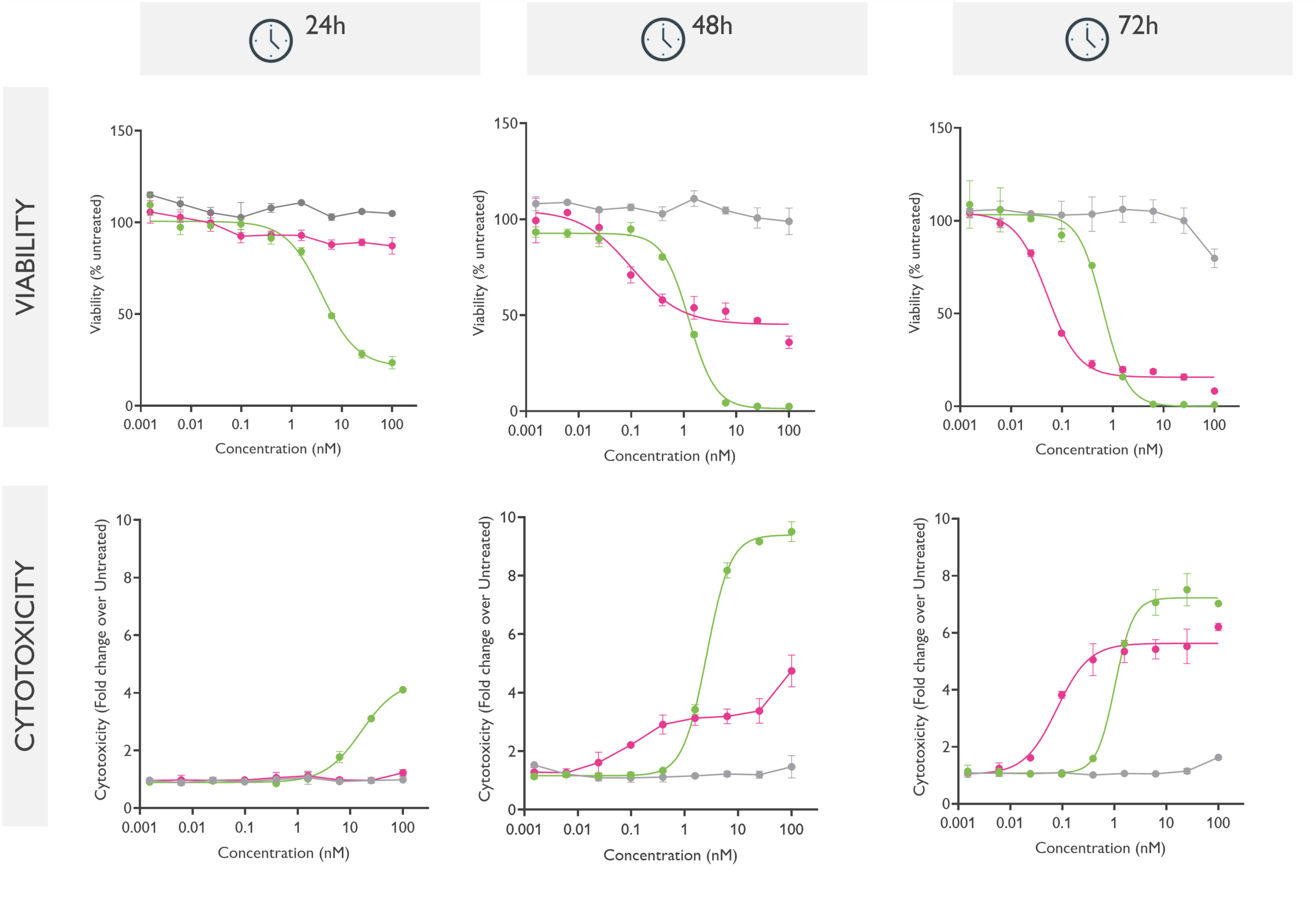
Data showing the impact of an antibody drug conjugate (ADC) on target cell viability and cytotoxicity, compared to a control ADC (isotype control with same payload) or payload alone:
Autophagy
Autophagy is key to maintaining and regulating cell homeostasis, and its dysfunction is implicated in multiple diseases such as neurodegenerative disorders and tumourigenesis. RxCelerate have experience quantifying autophagy in both primary cells and cell lines.
Phagocytosis
The modulation of phagocytosis is of interest in drug discovery, for example to treat inflammatory disease or promote cancer cell clearance. RxCelerate have extensive experience in using techniques such as flow cytometry, imaging flow cytometry and live cell imaging to measure phagocytosis. Our in-house team of phlebotomists and donors allow us to freshly isolate primary monocytes for use in these assays.
Migration
Cell migration is central to multiple physiological and pathological processes such as metastasis and wound healing. RxCelerate can design bespoke medium-to-high throughput migration assays.
Metabolism (Seahorse)
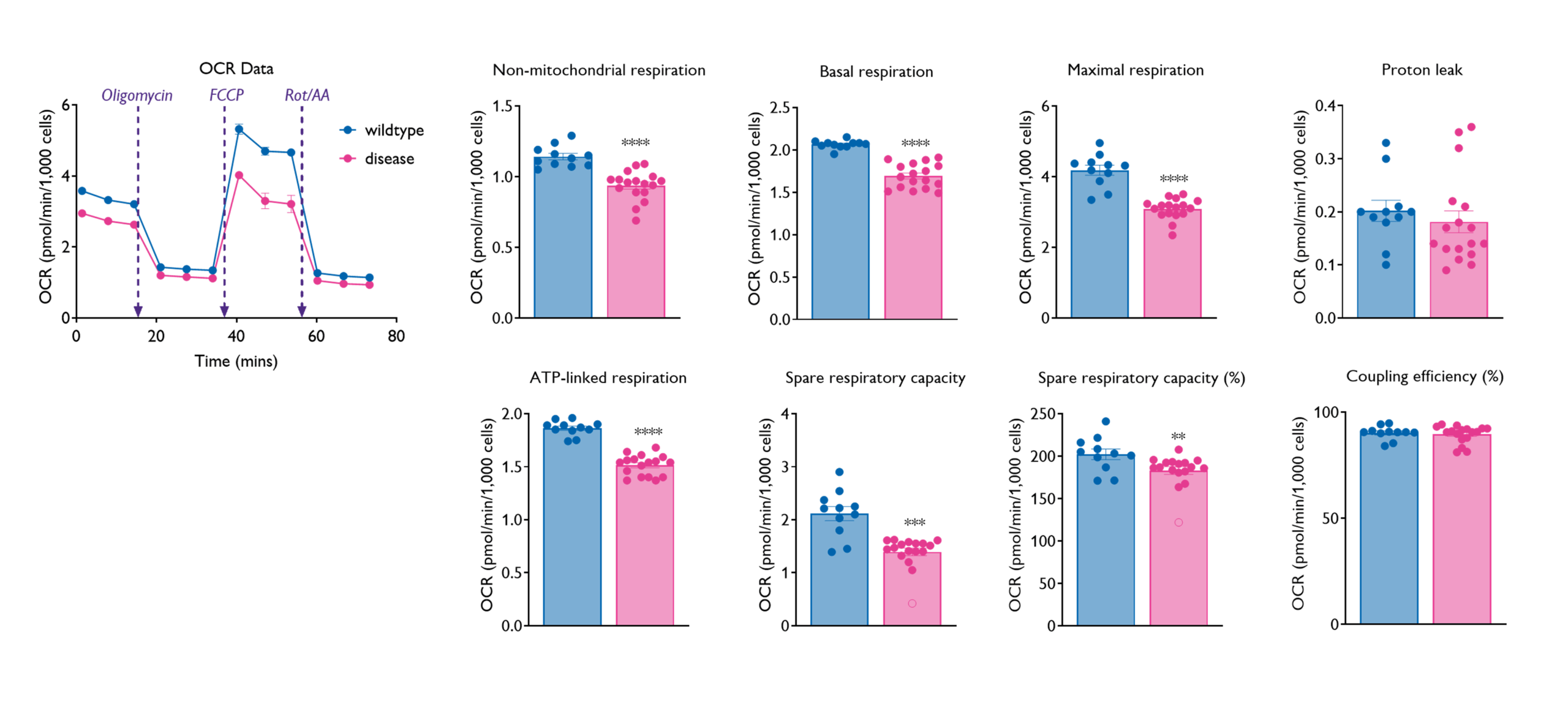
Metabolic profiling of cells enables quantification of glycolytic rate and oxidative phosphorylation. The Seahorse XF Cell Mito Stress test can be used to determine basal respiration, ATP-linked respiration, proton leak, maximal respiration, spare respiratory capacity and coupling efficiency. The Seahorse XF Glycolysis Stress Test can be used to measure glycolysis, glycolytic capacity & glycolytic reserve.
Seahorse XF Cell Mito Stress Test data, from work carried out for Bit.bio, showing the impact of a disease-causing mutation in the Huntingtin gene HTT (mutHTT) (compared to wildtype human iPSC-derived cells) on multiple metabolic parameters:
Cellular Signalling (Reporter Cell)
We have substantial experience in the optimisation of a wide variety of high throughput cell reporter assays to measure the impact of test agents on specific signalling pathways.
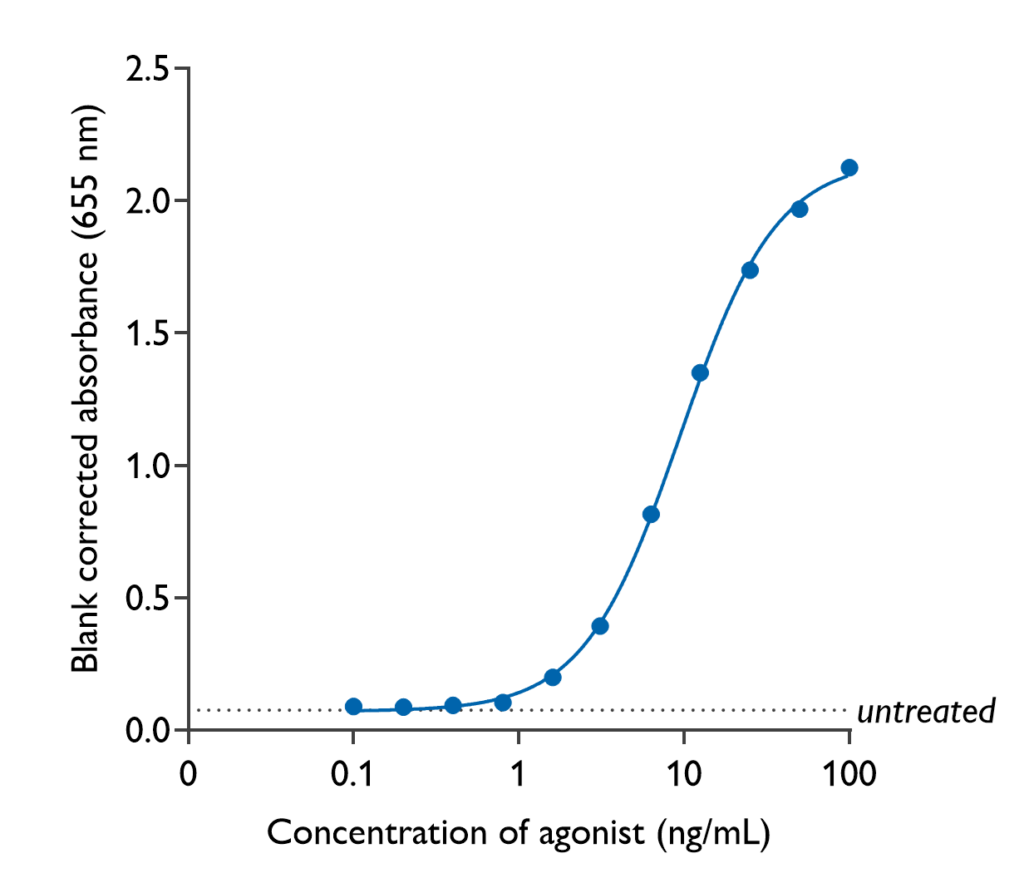
Data showing concentration-dependent induction of signalling in reporter cells following incubation with an agonist:
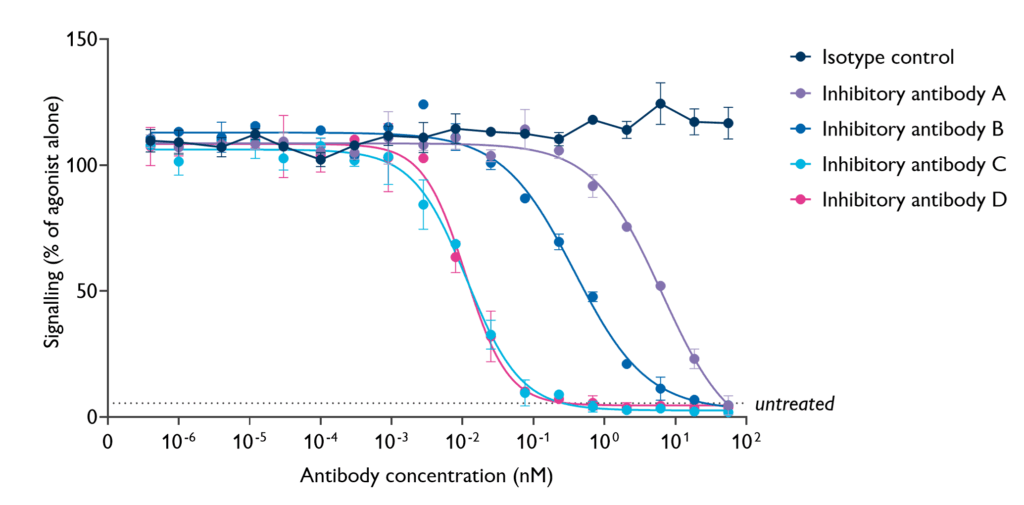
Data showing concentration-dependent inhibition of signalling in reporter cells incubated with varying concentrations of an inhibitory antibody or isotype control:
Find out more about others services offered by our in vitro team:
Our in vitro team input at all stage of the drug discovery pipeline, feeding into the integrated approach of RxCelerate:
|