
Mapping covalent binding sites in an engineered therapeutic protein using our Proquant® proteomics platform
Understanding where and how a covalent protein therapeutic interacts with its target is critical for optimising binding and reducing development risk. In this case study, RxCelerate’s proteomics team identified the sites of covalent binding between a protein therapeutic and its target receptor, revealing unexpected binding behaviour and self-reactivity that directly informed the next round of computational design.
Introduction
A client is working with RxCelerate to develop a protein therapeutic comprising a high-affinity receptor-binding domain and a functionalised warhead designed to react covalently with the target receptor, enhancing the durability of the interaction.
The programme combines the client’s protein engineering and covalent-warhead chemistry with expertise from across RxCelerate, including computational modelling, preclinical biology and proteomics. While modelling guided therapeutic design and cell-based and biochemical assays evaluated activity, the proteomics team mapped the covalent interactions between the therapeutic and its target receptor, providing key mechanistic insights to guide the next stage of development.
Identifying the covalent binding sites
While the presence of the covalent interaction was shown in gel-shift assays, we wanted to identify the reaction site in the target receptor. We carried out a proteomics experiment to investigate the crosslinks between the protein therapeutic and the target, to confirm the location of reaction of the warhead.
The analysis identified two clear covalent crosslinks involving the warhead.
The first was the anticipated interaction between the therapeutic and its target receptor, but the site of interaction was unexpected. Instead of binding to the predicted site (Fig 1a), the warhead reacted with a residue near the N-terminus of the target receptor (Fig 1b), in an intrinsically disordered region of the protein whose structure could not be modelled accurately.
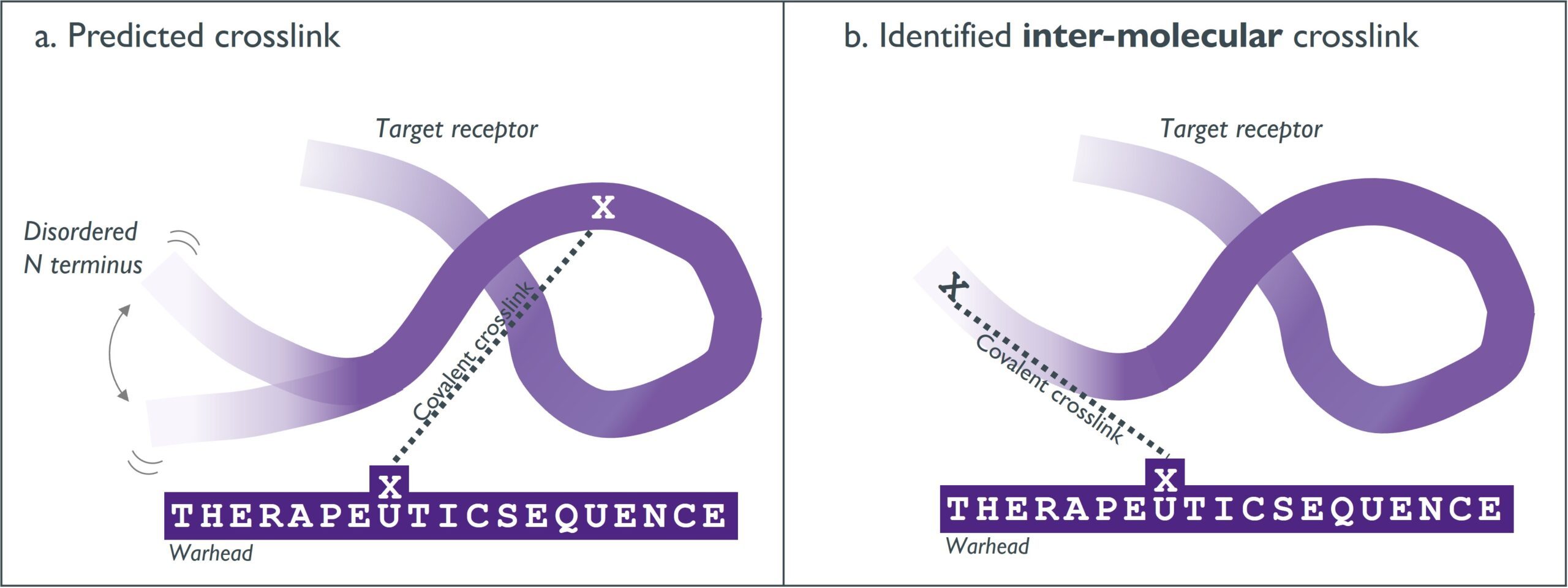
Figure 1. Predicted (a) and identified (b) covalent interactions between therapeutic and target receptor
Secondly, we found a covalent interaction with a residue within the therapeutic protein (Fig 2a). Interestingly, we also identified the same covalent interaction at low abundance within a single peptide ion, which was only identified because trypsin cleavage did not occur in a small proportion of the protein (Fig 2b).
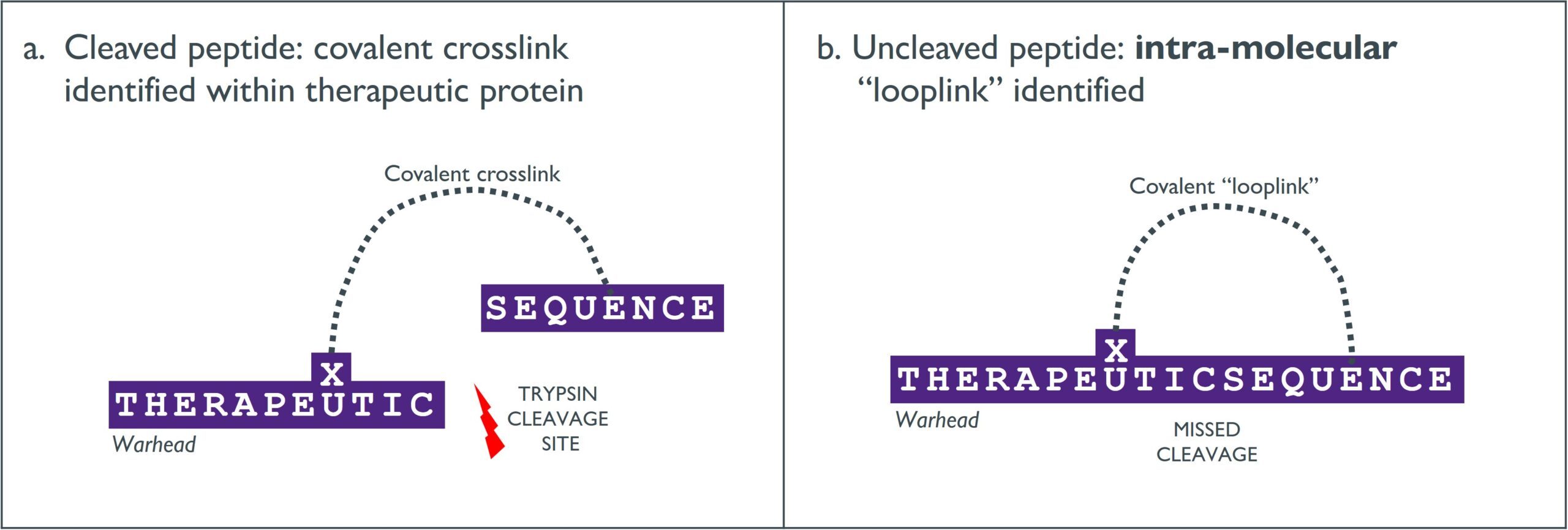
Figure 2. Covalent crosslink identified within the therapeutic, identified (a) as a link between two different peptides where trypsin cleavage was complete and (b) as a looplink within a peptide where trypsin cleavage did not occur.
Our patented ProQuant® platform is exceptionally precise and accurate and enables us to quantify the proportion of the protein therapeutic that has reacted covalently with the different regions of its target and itself. We could calculate, therefore, that 10% of the therapeutic had reacted with itself and was in a form unable to react with its target receptor. Furthermore, detection of looplink (2b) demonstrated that at least 10% of these self-reaction events were intramolecular, occurring within a single therapeutic molecule rather than between two therapeutic molecules.
Conclusions
These results from the proteomics study have provided two key insights:
- A covalent interaction was identified between the protein therapeutic and an intrinsically disordered region of the receptor, outside the region predicted by structural modelling.
- Self-reactivity within the protein therapeutic renders 10% of the warhead inactive.
Together, these findings enabled further modelling of the interaction and guided the next design cycle, offering clear direction as to where changes could be made to improve binding and covalent interaction with the target while minimising self-reaction. Overall, the mechanistic insight gained from this proteomics study significantly de-risks the programme and improves the likelihood of delivering a best-in-class therapeutic.
Find out more about our Proteomics Services.