
In Vitro Assays for Antibody Characterisation
Alongside our sister company RxBiologics, RxCelerate can deliver fully integrated antibody discovery and development programmes. We provide a comprehensive suite of in vitro assays for antibody characterisation, from target engagement to Fc effector function assays.
Our Services:
Target engagement assays
Binding to recombinant target protein can be measured using a high-throughput (384-well plate) ELISA-based method. Our standard protocol, that can be further optimised for the target of interest, is compatible with screening periplasmic preps for early hit discovery.
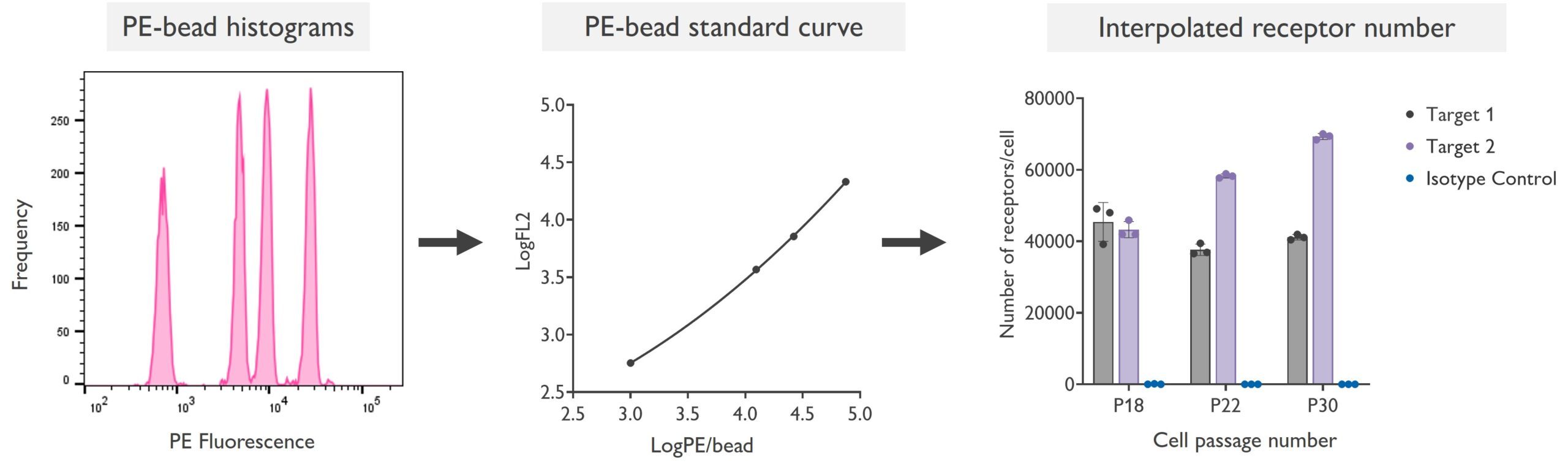
Flow cytometry can be used to determine the number of target proteins expressed per cell and to confirm antibody binding.
Flow cytometry data showing the quantification of target 1 and target 2 surface expression in a cell line of interest using PE-conjugated beads:
Internalisation assays
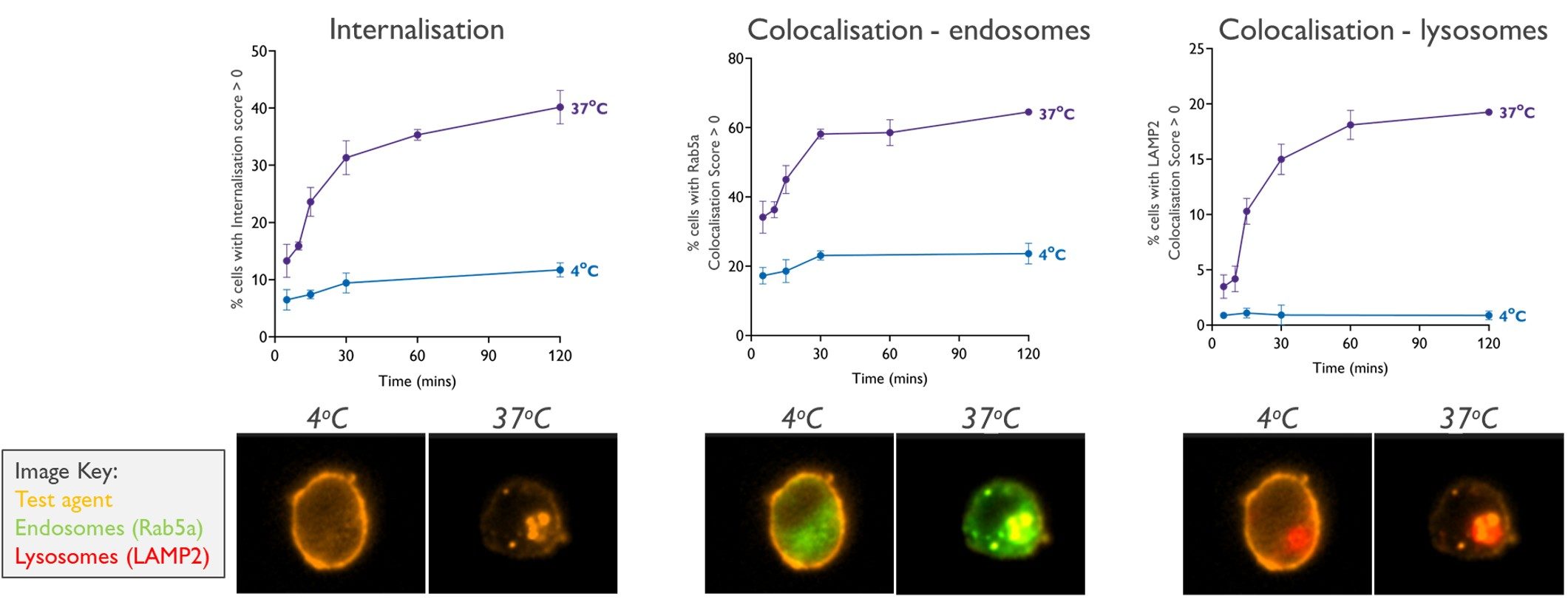
Antibody binding to cell-surface receptors triggers endocytosis and internalisation of the receptors and antibodies into the cell. Internalisation assays can be used to demonstrate this process, which is essential for the targeted delivery of drugs to cancer cells (for example with antibody-drug conjugates; ADCs).
ImageStream data showing the effect of temperature on test antibody internalisation and trafficking to endosomes and lysosomes (defined by co-localisation with endosome (Rab5a) and lysosome (LAMP2) biomarkers):
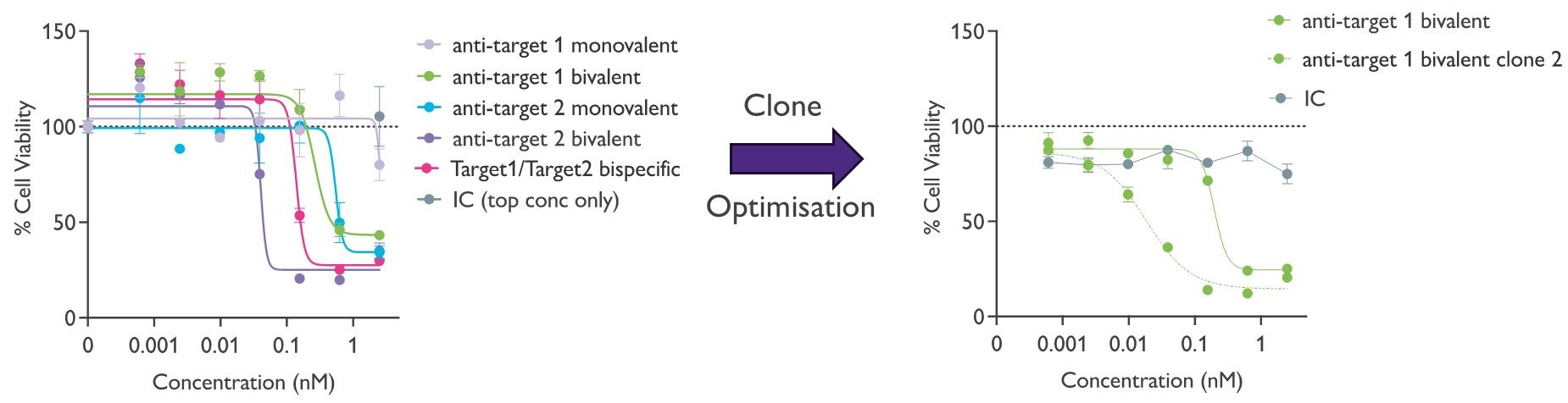
Indirect immunotoxin cytotoxicity assay data showing the enhancement of antibody internalisation following bivalent clone optimisation:
T Cell Activation assays
The modulation of T-cell responses is a key approach for the treatment of cancer and autoimmune diseases. T cell activation bioassays can be used to demonstrate co-stimulation by a multi-specific therapeutic antibody using both primary cells and immortalised cell lines.
Fc Effector Function assays
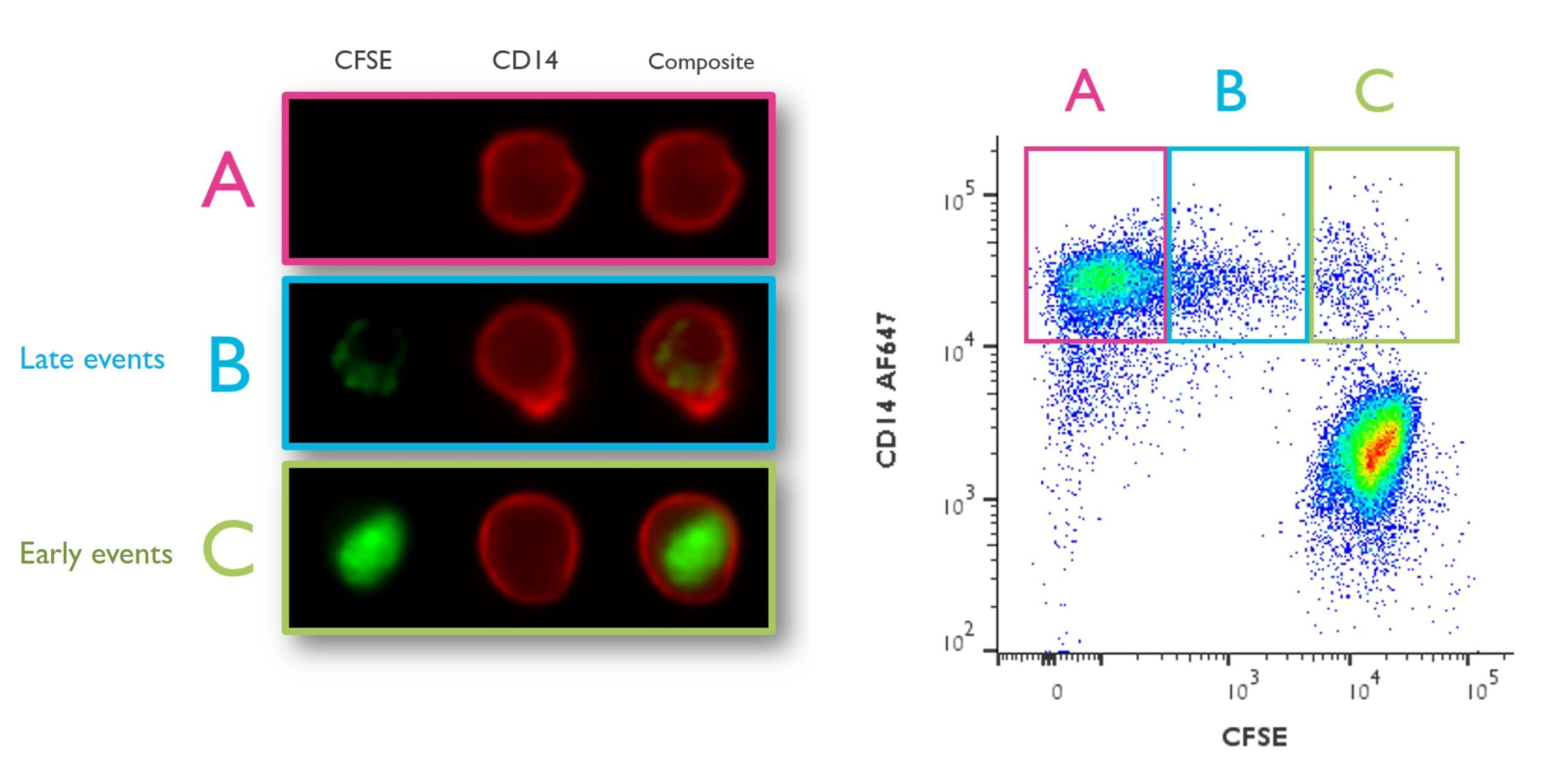
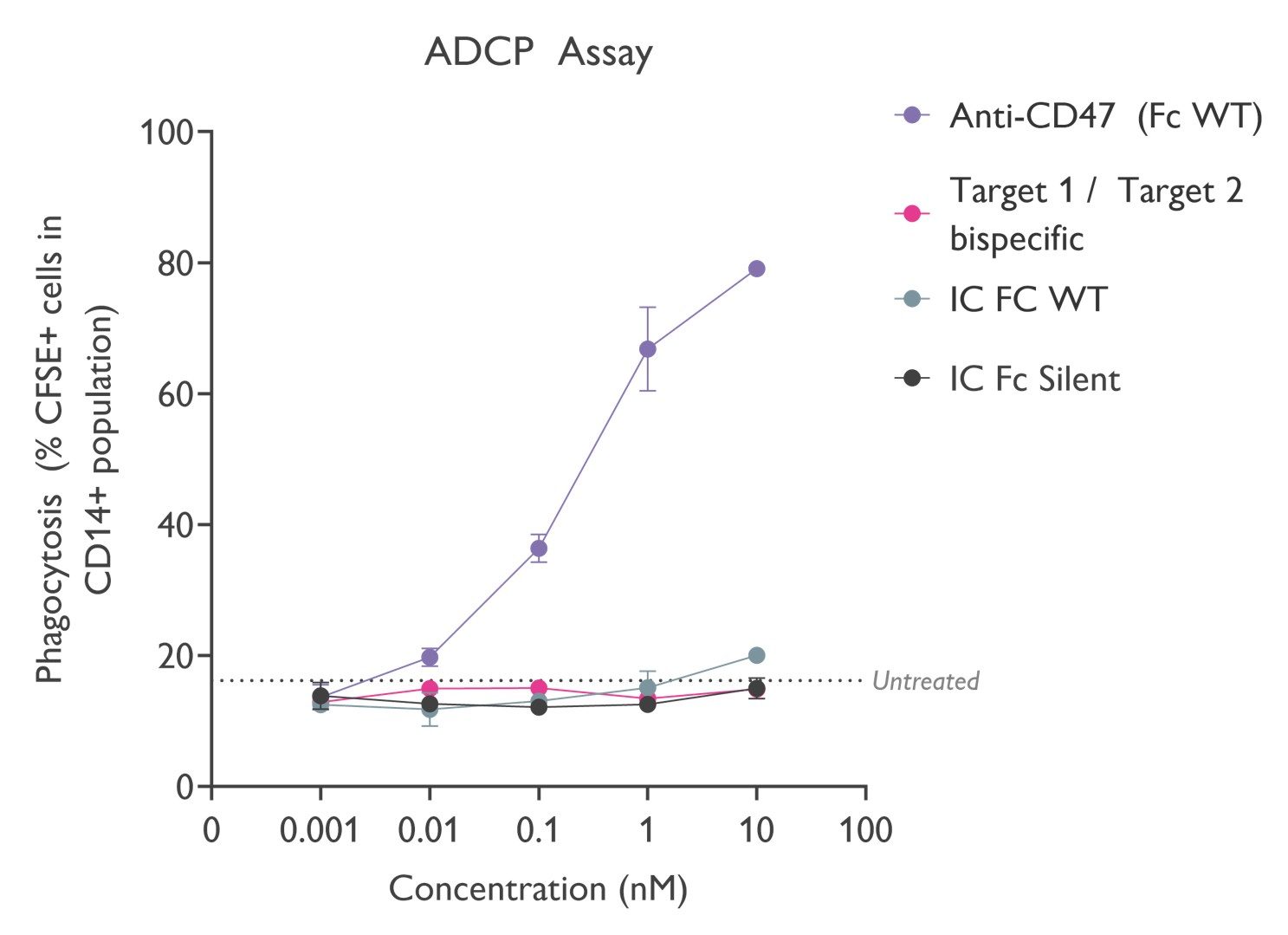
The effector function of the Fc portion of therapeutic antibodies is important in determining their intended efficacy and mode of action. After binding a target cell, antibodies can activate immune cell activation via the Fc portion that can result in cytotoxicity (ADCC) or phagocytosis (ADCP). Alternatively, target cell-bound antibodies can activate the complement cascade and formation of membrane attack complexes that cause cytotoxicity (complement-dependent cytotoxicity; CDC). A key step in triggering CDC is Fc-mediated binding to complement C1q protein. We offer assays to quantify each of these Fc effector functions.
ImageStream data showing increased ADCP for a positive control antibody, and successful Fc silencing in the target 1 / target 2 bispecific antibody:
Find out more about others services offered by our in vitro team:
Our in vitro team input at all stage of the drug discovery pipeline, feeding into the integrated approach of RxCelerate:
|